
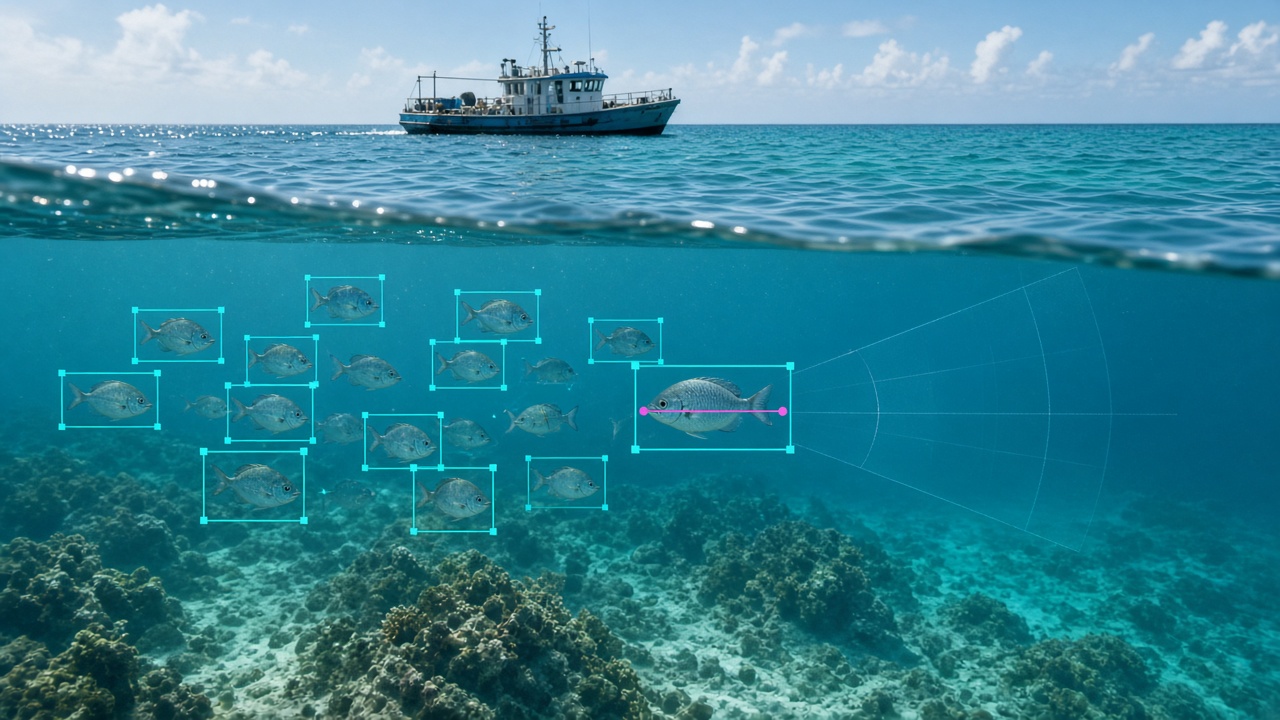
Underwater cameras collect more video than a team can review by hand. Computer vision can classify species, keep counts, and estimate biomass from stereo footage instead of leaving every frame to a manual pass.
Marine ecology research uses underwater cameras across many survey designs. Mapizy’s published fish-survey work developed AI and computer-vision workflows for taxonomy classification and biomass estimation in underwater stereo videos. Agriculture and natural-resource solutions on the site also list identifying and counting fish species and automatically measuring fish length.
Key takeaways
Stereo video
The documented workflow uses underwater stereo video, which supports length measurement as well as detection.
Taxonomy
Models classify species so survey teams can track biodiversity and species of concern without watching every clip.
Abundance
Automatic counts keep a running record of how many fish appear in the footage.
Length and biomass
Length measurement in stereo video is the published path to biomass estimation.
Methodology
Ingest the video
Collect stereo underwater footage so each detection has a pair of views for measurement.
Detect and classify
Locate fish, assign a taxonomy label, and keep a count for the survey period.
Measure biomass
Use stereo geometry to measure length, then estimate biomass from those lengths rather than from a visual guess.

Practical applications
Research and monitoring teams can use automated classification and length measurement to keep up with camera volume. See the fish-survey use case and agriculture and natural-resource solutions.
Taxonomy classification, counts, length measurement, and biomass estimation are taken from Mapizy’s published use-case and solutions pages. This report does not assign accuracy percentages or stock estimates. Turbidity, lighting, and camera calibration still affect results. Diagrams are conceptual.
Related reports
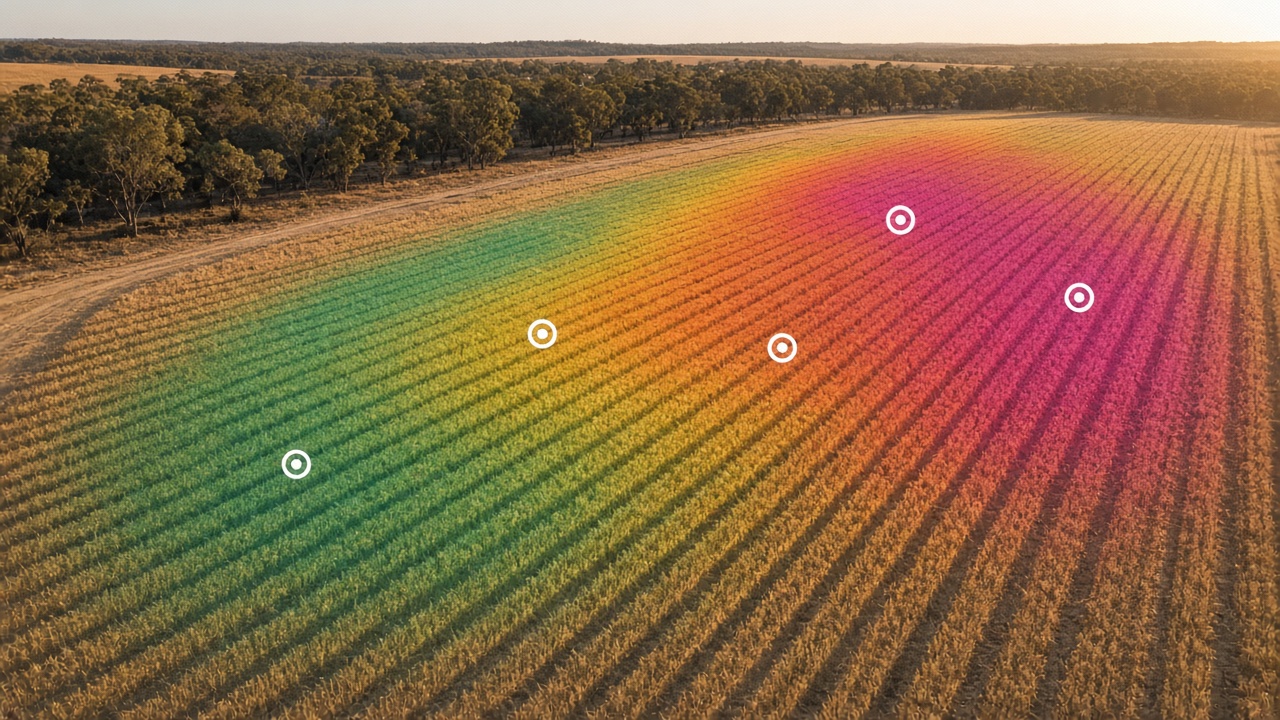
AI-assisted pest monitoring for agriculture
Snail detection, density maps, and variable-rate baiting from field images.
Read report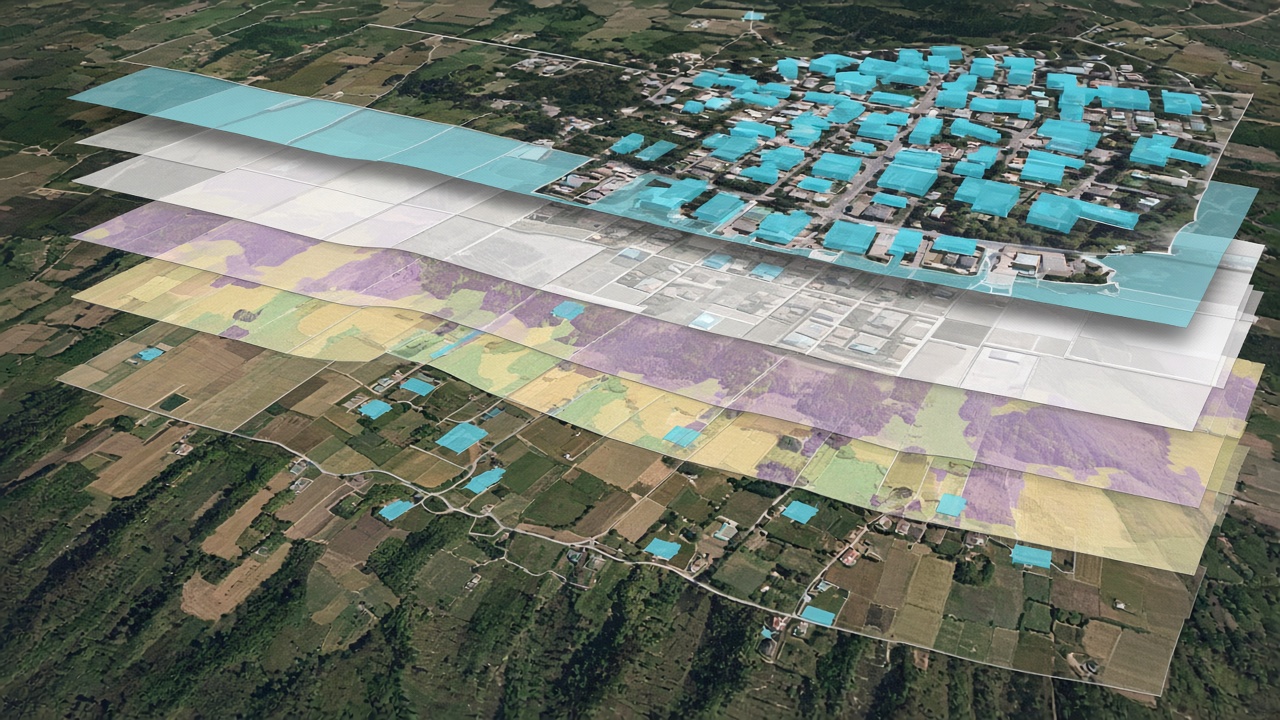
A practical framework for evaluating geospatial data quality
Four questions on currency, coverage, fitness, and delivery before you buy a dataset.
Read report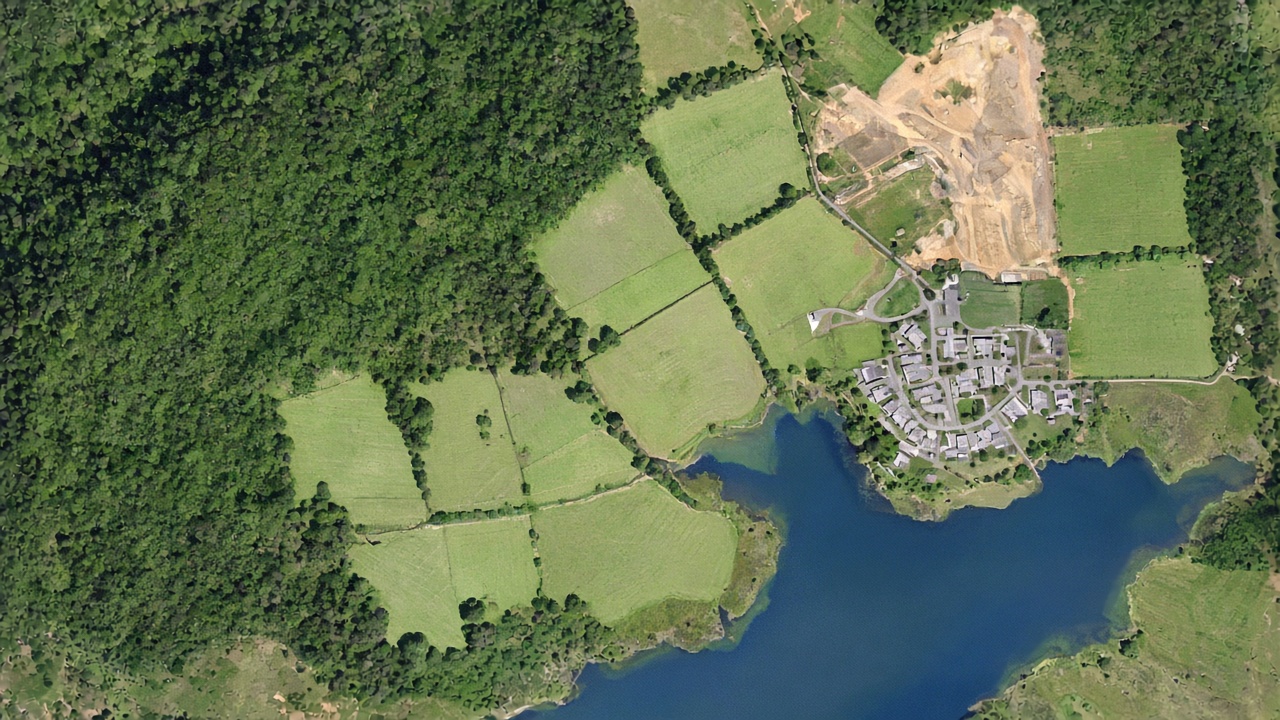
Monitoring forests and land cover at scale
Forest inventory plus GIS-ready layers for trees, turf, water, structures, and bare ground.
Read reportReview a fish-survey workflow
Request a demo to discuss stereo-video classification, counts, and biomass estimation on your footage.
Request a demo